Cut My Mom’s Loneliness by Half: How a Simple Group Chat Trick Changed Everything
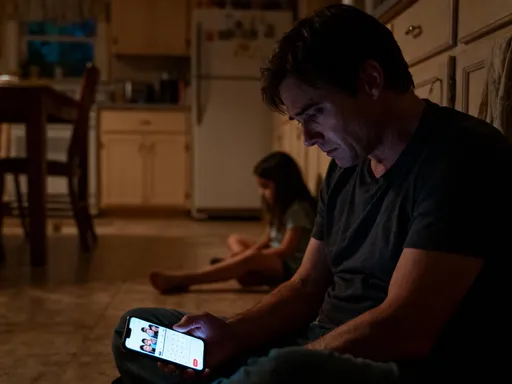
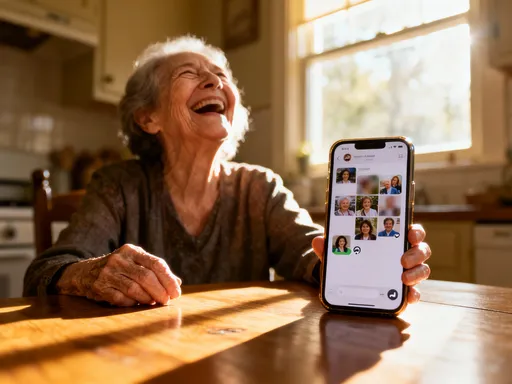
You know that quiet moment when your elderly parent says, “I’m fine,” but you can see the loneliness in their eyes? I did. My mom started withdrawing after Dad passed, and our weekly calls weren’t enough. Then I tried something small—a shared photo chat with her old friends. No fancy apps, no tech stress. Just laughter, memories, and daily check-ins. Within weeks, her mood lifted. This is how we rebuilt her world, one simple message at a time.
The Quiet Crisis No One Talks About
It’s easy to think that as long as our parents are safe and healthy, they’re truly okay. But there’s a silent struggle many older adults face—loneliness—that doesn’t show up on a medical chart. After my dad passed, my mom moved into a smaller apartment closer to me. I thought being nearby would be enough. I’d call every Sunday, bring groceries on Wednesdays, and take her out for lunch when I could. But over time, I noticed subtle shifts. Her voice on the phone grew softer. Her answers became shorter. The spark that used to light up when she talked about her garden, her book club, or her old coworkers—it was dimming.
At first, I blamed grief. Of course she was sad. But then I started reading about social isolation in older adults, and what I found shook me. Studies from trusted health organizations show that prolonged loneliness can be as harmful to the body as smoking fifteen cigarettes a day. It increases the risk of heart disease, weakens the immune system, and can even accelerate cognitive decline. This wasn’t just about missing someone—it was a real, physical threat to her well-being.
And yet, the solution wasn’t more visits from me. I realized something hard: I couldn’t be her entire social world. She didn’t need me to fill every silence. She needed her own people—her own tribe. The women she used to laugh with over coffee, the friends who remembered her wedding dress and her first job. They were still out there. They just weren’t connected. And that’s when it hit me: what if I could help her rebuild that circle—not in person, not right away—but through something as simple as a group chat?
Why Traditional Check-Ins Fall Short
We’ve all been there. You call your mom, dad, or elderly relative, and the conversation goes like this: “How are you?” “Oh, I’m fine.” “Did you eat?” “Yes, I’m fine.” “Any plans today?” “No, I’m just fine.” And then the silence stretches. You know they’re not really fine. But pushing feels invasive. And honestly? Those calls started to feel more like duty than connection—for both of us.
I remember one Sunday, after a particularly short call, I sat in my car and just cried. I loved my mom so much, but I felt helpless. Was this the new normal? Her alone in her apartment, me trying to squeeze care into 20-minute check-ins between work and kids? I tried video calls next. I thought seeing each other would help. But it was awkward. She’d fumble with the phone, turn the camera the wrong way, or say, “I don’t want you to see me like this,” and refuse to turn it on. She didn’t want to be a burden. She didn’t want to be pitied.
What I finally understood was this: she didn’t want to be checked on. She wanted to belong. She wanted to be part of something—something that wasn’t about her age, her health, or her loss. She wanted to be seen for who she still was: funny, sharp, full of stories. I remembered how she used to come home from her bridge club, cheeks flushed, eyes sparkling. “Oh, you should’ve heard what Margaret said!” she’d laugh. That kind of joy wasn’t in our calls. It was in her friendships. And those friendships had just… faded. Not because anyone stopped caring, but because life got busy, distances grew, and no one knew how to restart the conversation.
So I asked myself: what if technology could be the bridge—not to replace real connection, but to bring back the feeling of it? Not a complicated app, not a steep learning curve. Just a simple, familiar space where she could hear her friends’ voices, see their faces, and remember they were still there.
The Simple Tech That Changed Everything
I didn’t want to overwhelm her. No new passwords, no confusing interfaces. I looked at what she already used—her smartphone, WhatsApp. She knew how to receive messages, open photos, and listen to voice notes. That was enough. I didn’t need to teach her everything. I just needed to create a space where she could show up as herself.
I started by reaching out to three of her oldest friends—women she hadn’t seen in years but used to talk about all the time. One lived two states away, one was a retired teacher, and the third had been her neighbor for twenty years. I explained what I was trying to do: “I want to start a little chat group for Mom. Nothing formal. Just a place where you can share little moments, like you used to over coffee.” I gave them a simple invitation: “Just say hello. Send a photo if you feel like it. No pressure.”
The first week was quiet. I sent a photo of my mom’s favorite flowers blooming in her window box. One friend replied with a simple “How lovely!” Another sent a picture of her cat. Then, one morning, my mom’s phone buzzed. It was a voice note from Margaret. “Hey, girl! Just saw your geraniums—reminds me of our porch wars in the 90s!” I watched my mom’s face light up as she listened. She played it twice. Then, with my help, she recorded her first voice message: “Oh, Margaret! I still use that same old potting mix you gave me!”
That was the start. Slowly, the chat came alive. Someone shared a recipe. Another sent a meme about bad knees and good wine. Then came the “Remember when…?” moments. “Remember when we got lost on that trip to the coast?” “Remember when we all wore those ridiculous hats to the garden party?” The messages weren’t constant, but they were steady. And they were full of warmth. It wasn’t about how often they posted—it was about knowing someone was on the other side, smiling.
This wasn’t a tech miracle. It was a human one. The app didn’t matter. What mattered was that it was easy, familiar, and full of people who knew her long before she became someone’s mom or someone’s patient. She was just… herself.
How We Made It Effortless for Her
Here’s the truth: most tech fails for older adults not because they can’t learn it, but because it feels like work. It’s not intuitive. It’s full of tiny buttons, confusing menus, and the fear of “breaking” something. I didn’t want my mom to feel that stress. So I made the chat as frictionless as possible.
First, I set up her phone for her. I made the WhatsApp icon big and easy to find. I saved a few voice messages she could reuse—like “Good morning, girls!” or “Just saw the most beautiful sunset.” I turned on voice-to-text so she could speak instead of type. And I showed her one button: the microphone. “Just press this and talk,” I said. “No typing. No spelling. Just your voice.”
The first few times, she was nervous. “What if I say something silly?” she asked. “They’ll love it,” I told her. And they did. She started sending voice notes about her morning tea, her walks around the block, her cat’s latest antics. One day, she recorded ten minutes about a bird that kept tapping on her window. Her friends responded with equal warmth—some with laughter, others with their own bird stories. One even sent a photo of a similar bird in her yard.
I didn’t ask her to check the chat every hour. I didn’t make it a chore. It was there when she wanted it. Sometimes she’d listen to messages while having breakfast. Other times, she’d wait until afternoon, when it was quiet. The rhythm was hers. And because it felt natural—like talking to friends over the phone, not performing for an app—she kept coming back.
The key wasn’t the technology. It was removing every barrier between her and the connection she craved. No passwords to remember. No logins. No complicated steps. Just speak, share, and be heard.
The Ripple Effect on Her Daily Life
The changes didn’t happen overnight. But within a few weeks, I started noticing little things. She began dressing up in the morning—even when she wasn’t going anywhere. “The girls might ask what I’m wearing!” she said with a grin. She started taking walks just to take photos of flowers, trees, or funny signs. “I have to send the girls something nice today,” she’d say.
Meals became events. She’d record voice notes describing what she cooked—“Just made your mother’s apple pie, Ruth!”—and someone would always reply with “Now I’m hungry!” or “Send a slice!” Her sleep improved. She told me she wasn’t lying awake as much. “I have things to look forward to now,” she said. Even her doctor noticed. At her last appointment, he commented on her energy, her mood. “You seem lighter,” he said. She smiled. “I am. My girls keep me laughing.”
What surprised me most was how it gave her back her voice—not just literally, through voice messages, but emotionally. She wasn’t just responding to others. She was initiating. She’d start a conversation. Share a memory. Ask a question. She wasn’t waiting to be included. She was part of something again.
And it didn’t replace our family time. If anything, it made our calls better. She had more to talk about. She’d say, “Oh, guess what Margaret said today!” or “We’re all arguing about the best way to grow tomatoes.” The loneliness that used to hang in the background was being replaced by joy—small, everyday joy. The kind that comes from being seen, remembered, and loved just for who you are.
How You Can Start This for Someone You Love
You don’t need to be tech-savvy. You don’t need to buy anything. All you need is care and a few minutes to set something up. Think about the person you love—your mom, dad, aunt, or neighbor. Who were their people? Who made them laugh before life got quiet?
Pick a platform they already use. WhatsApp, Facebook Messenger, iMessage—whatever feels familiar. Create a small group. Three to four people is perfect. Too many can feel overwhelming. Reach out to those friends personally. Say, “I’m starting a little chat for Mom. Would you like to be part of it?” Keep it low-pressure. No rules. No expectations.
Start small. Share one photo. Post one memory. Send one voice message. Be the first to speak. Model the ease. If no one replies right away, don’t give up. Gently remind them. “Mom loved that photo you sent!” or “She’s been smiling all day since you said hello.” Celebrate every response, no matter how small.
And remember: the goal isn’t activity. It’s belonging. It’s not about how many messages they send, but how they feel when they open the chat. Do they feel seen? Do they feel part of something? That’s the real measure of success.
I’ve had friends try this with their parents. One told me her dad, who hadn’t spoken to his old fishing buddy in twenty years, now exchanges daily jokes about bad weather and worse fishing stories. Another said her mom started a recipe swap that turned into a virtual cooking club. These aren’t grand gestures. They’re tiny threads of connection. But woven together, they create a lifeline.
More Than a Chat—It’s a Lifeline
This simple group chat didn’t just reduce my mom’s loneliness. It gave her back her identity. She’s not just “the widow” or “the quiet one.” She’s the funny one, the storyteller, the friend who remembers everyone’s birthday. She plans little reunions now—virtual coffee mornings, shared movie nights, even a photo contest for the best garden bloom.
She teases her friends. She shares her opinions. She feels needed. And for me, the peace that comes with knowing she’s not just surviving, but thriving, is priceless. I don’t worry as much when I can’t call. I know she’s not alone. I know her phone will buzz with a message that makes her smile.
Love isn’t just about showing up. It’s about helping the people we care about feel connected, valued, and alive. Technology, when used with heart, can be a powerful tool for that. It’s not about the latest gadget or the fastest internet. It’s about using what we have to rebuild what matters—relationships, memories, joy.
If you’re reading this and thinking of someone who says “I’m fine” a little too often, I hope you’ll try this. Start small. Be patient. Be kind. Because sometimes, the simplest things—a photo, a voice, a shared memory—can heal in ways we never expected. And in a world that often feels too fast, too loud, too disconnected, that kind of quiet miracle is exactly what we all need.